7 Best Oscillating Fans for Living Rooms (November 2026)
The best oscillating fans for living rooms include the DREO Smart Pedestal Fan for shared living rooms, the DREO Standing Oscillating Fan for moving between rooms, and the Rowenta VU5550 Turbo Silence Oscillating Fan for higher seating.
On this page (9 sections)
- Which oscillating fans suit different living rooms?
- The best oscillating fans for living rooms
- How should you choose the best oscillating fan for your layout?
- Which airflow and noise figures matter most?
- Which controls will you actually use?
- How do you set up an oscillating fan for better coverage?
- How do you keep an oscillating fan clean and steady?
- Which common buying mistakes should you avoid?
- Which oscillating fan should you choose for your living room?
The best oscillating fan for most living rooms is the DREO Smart Pedestal Fan, 120 by 120 Degrees, thanks to automatic movement in both directions and several control options. Choose a different model when carrying weight, higher seating, overnight use, or a tower shape matters more.
Start with where people sit and the clear space between them and the fan. A well-placed fan at a comfortable speed is more useful than extra power aimed into furniture.
For more adjustable stands, see our best pedestal fans. Our comparison of the differences between tower and pedestal fans helps if you're still choosing a shape.
Our picks at a glance
-
1
 Best for shared living rooms
DREO Smart Pedestal Fan, 120 by 120 Degrees
8.4/10 our score
See it on Amazon -
2
 Best for moving between rooms
DREO Standing Oscillating Fan, Quiet
8.2/10 our score
See it on Amazon -
3
 Best for higher seating
Rowenta VU5550 Turbo Silence Oscillating Fan
7.8/10 our score
See it on Amazon
- 4
 Check it
Levoit 120-Degree Standing Fan
Best for overnight guests - 5
 Check it
DREO Standing Fan, 120 by 100 Degrees
Best for spread-out seating - 6
 Check it
Rowenta Fresh 180-Degree Oscillating Fan
Best for open seating layouts - 7
 Check it
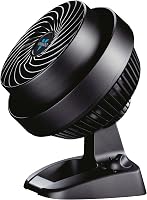
Vornado VORA 8 Large Air Circulator
Best for low seating
Which oscillating fans suit different living rooms?
Choose automatic two-axis movement for spread-out seating, a taller stand for higher chairs, or sleep controls for a room that hosts overnight guests. If you carry your fan daily, weight deserves as much attention as airflow.
FancyFolder compared movement, controls, cleaning access, dimensions, and stated performance figures to match these fans to common living room needs. The scores reflect those features and their usefulness for this search.
| Product | Best for | Airflow | Movement | Controls | Our score |
|---|---|---|---|---|---|
| DREO Smart Pedestal Fan, 120 by 120 Degrees | shared living rooms | 1000 CFM | Automatic horizontal and vertical oscillation, up to 120 degrees each | App, voice, remote, touch | 8.4 |
| DREO Standing Oscillating Fan, Quiet | moving between rooms | 1000 CFM | 90-degree horizontal oscillation; 105-degree pivoting head | Remote, touch | 8.2 |
| Rowenta VU5550 Turbo Silence Oscillating Fan | higher seating | Up to 2436 CFM | Oscillating or stationary head | Manual dial, remote | 7.8 |
| Levoit 120-Degree Standing Fan | overnight guests | 908 CFM | Automatic 90-degree horizontal swing; manual 120-degree vertical adjustment | Remote, touchpad | 7.5 |
| DREO Standing Fan, 120 by 100 Degrees | spread-out seating | 1150 CFM | 120-degree horizontal and 100-degree vertical oscillation | Remote, touch | 7.4 |
| Rowenta Fresh 180-Degree Oscillating Fan | open seating layouts | 180-degree oscillation | Digital panel, remote | 7.0 | |
| Vornado VORA 8 Large Air Circulator | low seating | OmniWave multi-axis oscillation | Touch with control lock, RF remote | 7.0 |
The best oscillating fans for living rooms
The DREO Smart Pedestal Fan leads for shared spaces with several seating positions. The other picks make more sense when you have a specific placement or control need.
DREO Smart Pedestal Fan, 120 by 120 Degrees: Best for shared living rooms
- Simultaneous horizontal and vertical oscillation
- App, voice, remote and touch controls
- 9 speeds and 6 modes
Automatic movement in both directions suits seating spread around a living room. Several control options let household members adjust the breeze in the way they prefer.
Pros
- Automatic movement on both axes
- Temperature-based Auto Mode
- App and voice control
Cons
- More controls than a basic fan user needs
- 11.5 lb to carry between rooms
Choose this DREO for a shared living room with seats at different heights or angles. Its head can move horizontally and vertically at the same time, so you can spread the breeze without choosing one fixed upward or downward aim.
The combination of app, voice, remote, and touch controls also suits a household where people prefer different ways to operate appliances. You can use the remote from the sofa without making smart controls part of your daily routine.
Auto Mode responds to room temperature, while the other modes and speed choices let you take direct control. Use a fixed speed if changing airflow distracts you during conversation or a movie.
Skip it if your fan will serve one chair and rarely change settings. Its wider movement and extra controls offer less value in that situation, and carrying it upstairs regularly is less appealing than choosing the lighter DREO below.
DREO Standing Oscillating Fan, Quiet: Best for moving between rooms
- Adjustable height
- Pivoting head
- Remote with beep mute
- Detachable blade and grilles
Its 5.2 lb weight makes this the easiest fan here to carry between rooms. Adjustable height and a pivoting head help direct air toward your usual seat.
Pros
- Lightest fan in this group
- Remote can mute beeps
- Blade and both grilles detach for cleaning
Cons
- Vertical positioning uses a pivoting head
- Stand reaches no higher than 42 in
Choose this DREO when one fan needs to follow you between rooms. Its low weight is the main reason to pick it over the first model, especially if you move between a living room and home office each day.
The stand adjusts from 38 to 42 inches, allowing small changes in airflow height beside a sofa or chair. Use the pivoting head to set the vertical aim, then horizontal oscillation to share the breeze across nearby seats.
The remote's beep mute is useful during films or quiet evenings, and the 8-hour timer lets you set a stopping time. Neither feature requires you to keep reaching for the fan itself.
Its detachable blade and front and rear grilles also make it a sensible choice for buyers who prioritize cleaning access. Skip it if you need automatic vertical sweeping or a stand tall enough to reach well above ordinary sofa height.
Rowenta VU5550 Turbo Silence Oscillating Fan: Best for higher seating
- 16 in oscillating head
- Height adjusts from 42 to 54 in
- Stationary airflow option
- Manual dial and remote
The tallest adjustable stand here suits higher seating and airflow paths above low furniture. A manual dial offers direct speed control without an app.
Pros
- Tall adjustable stand
- Fixed or sweeping airflow
- Built-in carrying handle
Cons
- 19 lb to move
- Only 4 speed choices
Choose the Rowenta VU5550 for higher seating or a taller airflow path. Its stand reaches from 42 to 54 inches, which gives you more height than the other adjustable pedestal models here.
That extra reach can help when low furniture interrupts the path from a shorter fan. Check the entire route to your seat, because raising the head won't solve a blockage caused by a tall cabinet.
The oscillating head can also stay stationary, making this a useful choice when you alternate between sharing air and directing it at one chair. Its manual dial and remote suit buyers who want straightforward speed changes without an app.
Rowenta states a noise range of 40 to 57 dB, so allow for a more noticeable sound as airflow increases. Skip this model if you carry your fan often or want many small speed steps, since it weighs 19 pounds and has 4 speeds.
Levoit 120-Degree Standing Fan: Best for overnight guests
- Sleep Mode dims the display and disables selection sounds
- Temperature-based Eco Mode
- 9 speeds
- Manual vertical adjustment
Sleep Mode suits a living room that becomes a guest bedroom at night. It turns off the display and selection sounds, then changes airflow as the night progresses.
Pros
- Sleep Mode manages light and sound
- Eco Mode adjusts speed with temperature
- 9 speed choices
Cons
- Vertical adjustment is manual
- Direction resets when powered on
Choose Levoit for a living room that becomes a guest bedroom. Sleep Mode turns off the display and disables selection sounds after 5 seconds, reducing two common distractions beside a sleeping area.
After an hour, that mode reduces speed, then responds to temperature changes through the night. Use a manual setting instead if your guest prefers airflow that stays consistent.
Levoit states noise levels of 20 to 23 dB at low speeds and 42 to 46 dB at high speeds. The lower range makes this worth considering for nighttime use, but choose based on the airflow you'll actually need rather than the minimum sound figure alone.
Horizontal movement is automatic, while you set vertical direction by hand. Skip it if you need continuous up-and-down movement or want the head to keep its previous direction after every restart, because it resets when powered on.
DREO Standing Fan, 120 by 100 Degrees: Best for spread-out seating
- Automatic horizontal and vertical oscillation
- Adjustable height from 37 to 42 in
- 9 speeds and 3 modes
A wide sweep and adjustable stand suit seating spread across a room. Remote and touch controls suit buyers who want two-axis movement without making app control a priority.
Pros
- Automatic movement in both directions
- Adjustable stand
- Temperature-based Auto Mode
Cons
- Stand stops at 42 in
- Requires a 120V power supply
Choose this DREO for seating spread across a broad area when you want automatic movement in both directions. It pairs that movement with an adjustable stand, giving you control over the starting height as well as the sweep.
Its 37-to-42-inch height range fits placement beside ordinary seating rather than well above it. Check that the fan head can send air past sofa arms before choosing the corner where it will stand.
Remote and touch controls suit buyers who prefer direct adjustments. Auto Mode can also reduce speed as room temperature falls, which is useful when the room becomes cooler later in the evening.
Skip it if your main need is a very tall stand or if you move the fan between floors daily. DREO specifies a 120V power supply for this model, so it also belongs off your shortlist if your electrical supply doesn't match that requirement.
Rowenta Fresh 180-Degree Oscillating Fan: Best for open seating layouts
- 180-degree oscillation
- 8-hour digital timer
- Remote storage
- Removable rear grid
The broad side-to-side sweep suits seats arranged across an open living area. A removable rear grid gives you access for routine maintenance.
Pros
- Broad horizontal sweep
- Remote has a storage spot
- No-tool assembly
Cons
- Only 3 speed choices
- No adjustable pedestal height
Choose the Rowenta Fresh 180 for seats arranged across an open living area. Its broad horizontal sweep can share air between seating positions that a narrower arc might miss.
That sweep is less useful when the fan sits beside a wall or serves one chair. Place it where the moving outlet faces the occupied area rather than sending part of each pass toward an unused corner.
The tower shape suits buyers who prefer an upright body instead of a round fan head on a stand. Measure the base area as well as the body, since a slim appearance doesn't mean the fan can squeeze into any gap.
An integrated handle and remote storage help when you rearrange the room, while the removable rear grid supports routine care. Skip it if you want adjustable head height or finer airflow changes than its 3 speeds allow.
Vornado VORA 8 Large Air Circulator: Best for low seating
- OmniWave multi-axis oscillation
- 10 speeds and 4 modes
- 12-hour timer
- Removable grille and blade
Its low floor form suits low seating with a clear airflow path. Several modes offer steady circulation or changing breeze patterns.
Pros
- 10 speed choices
- Control lock
- Grille and blade remove for cleaning
Cons
- Low position can put furniture in the airflow path
- U.S. use only
Choose the Vornado VORA 8 for low seating with an open path across the floor. At 15.38 inches high, it starts much lower than a pedestal fan, so placement matters more than its name or mode count.
Whole Room Circulation, Cyclic, Sleep, and Breeze modes offer different airflow patterns. Pick a changing pattern if you dislike an unbroken stream, or a more consistent setting when you want predictable airflow while reading.
The RF remote, touch controls, control lock, and 12-hour timer give you several ways to manage operation. The lock can help prevent accidental setting changes, though it doesn't replace safe placement around children.
A removable grille and blade give you cleaning access. Skip it if a sofa or coffee table will block its low airflow path, and note that Vornado specifies U.S. use only.
For alternatives in this form, compare our best air circulator fans.
How should you choose the best oscillating fan for your layout?
Choose the fan that can send air to occupied seats from a safe, clear position. Measure that position before comparing power figures or adding smart features to your wish list.
When is a wide sweep best for an oscillating fan?
A wide sweep helps when people sit far apart across the room. For one person, a narrower path or fixed direction keeps more airflow where it's wanted.
Think of oscillation as sharing time between seats. A wider arc can reach more people, but it also creates a longer pause before the breeze returns to each person.
Watch where the endpoints will fall from your planned position. A fan sweeping toward a bookcase for part of every cycle wastes useful coverage, even if its maximum angle sounds impressive.
Should vertical movement be automatic or manual?
Automatic vertical movement suits people seated at different levels or rooms where you want airflow to travel up and down. Manual tilt is enough when you only need to aim the head once toward a sofa.
Don't confuse a pivoting head with powered vertical oscillation. A head that tilts through a large angle may still need you to set its position by hand.
For a single seating row, try a level or slightly raised aim first. Continuous vertical movement can spend part of the cycle directing air above the people who want it.
How high should the fan sit?
Choose a height that gives the breeze a clear route to your upper body while seated. The right height depends on sofa arms, tables, and chair backs as well as the fan itself.
Measure from the floor to your likely airflow path, then look across the room from that level. This simple check can reveal a coffee table or sofa end that blocks a low circulator.
Leave space for the full moving head, not just the base. Curtains, shelves, and nearby plants shouldn't touch the fan as it turns.
Which airflow and noise figures matter most?
Use airflow figures to understand a fan's capacity, then choose by distance, placement, and the speed you can comfortably live with. Maximum output and minimum noise usually describe different operating conditions.
What does CFM tell you?
CFM means cubic feet of air moved per minute. It describes air volume, but the fan's outlet shape, direction, and distance from your seat also affect how the breeze feels.
Don't treat CFM as a room-size rating or a promise that every seat gets equal airflow. Cross-brand figures may use different measurement conditions, so they work better as one comparison point than as a complete ranking.
Long reach claims need the same care. You rarely need to send air across an empty room when placing the fan closer to the seating area gives you a more direct path.
How should you compare noise?
Compare sound at the speed you'll use, rather than choosing only by the lowest stated number. A quiet low setting won't help if you must run the fan much faster to reach your chair.
For conversation and television, try moving the fan closer and lowering its speed. Keep it far enough away that the airflow feels comfortable and the body doesn't obstruct movement through the room.
Nighttime comfort also includes beeps, display light, and changes in speed. A fixed setting may suit a light sleeper better than a temperature mode that changes airflow during the night.
Which controls will you actually use?
Choose a remote for sofa-side changes, a timer for planned stopping, and automatic modes when you want speed to follow room temperature. App and voice controls are useful when they fit habits you already have.
A remote is often the most practical extra in a living room. Give it a regular storage spot so adjusting the fan doesn't turn into searching between cushions.
A timer suits an evening routine when you want the fan to stop after you leave or fall asleep. It controls runtime, while a temperature mode changes airflow as conditions change.
Automatic speed changes won't refrigerate the room or hold a chosen temperature like an air conditioner. Use them for comfort adjustments, and switch to manual speed if you prefer steady airflow.
How do you set up an oscillating fan for better coverage?
Start on a firm, level floor with a clear airflow path, then adjust direction before increasing speed. Placement often solves weak coverage more effectively than using the highest setting.
- Assemble it fully. Follow the manual, secure the base and head, and confirm that guards and fasteners are in place.
- Choose a clear position. Keep the cord out of walkways and leave the intake, outlet, and full oscillation path unobstructed.
- Aim it while seated. Check the breeze from the chair or sofa you'll use, rather than judging direction while standing.
- Start at a low speed. Raise it until comfortable, then turn on oscillation if several seats need coverage.
- Check the outer seats. If one person gets little air, shift the fan or narrow the seating target before increasing power.
With air conditioning, use the fan to move cooled air toward the occupied area without blocking vents. Our guide to using an air circulator fan explains how direction affects room circulation.
An open doorway doesn't guarantee that one fan will serve two rooms well. Prioritize the room you're using and keep expectations tied to a clear airflow path.
How do you keep an oscillating fan clean and steady?
Unplug the fan before cleaning, and follow its manual for access to the grille and blades. Dust on air passages can reduce airflow, while loose assembly parts can contribute to rattling.
Check for dust regularly and clean sooner if you notice visible buildup. Households with shedding pets or dusty rooms may need more frequent attention than a fixed calendar suggests.
Use a soft brush or vacuum attachment where the manual allows it. Keep water out of motors, controls, and electrical connections, and dry any washable parts fully before reassembly.
Only remove parts intended for user cleaning. Our pedestal fan cleaning guide covers the basic process, while tower owners can follow how to clean a tower fan.
If a fan rattles, switch it off and check its surface, assembly, and removable parts before restarting. Stop using it if you find damage or an electrical problem.
Which common buying mistakes should you avoid?
Avoid choosing by sweep angle alone or expecting a fan to lower room temperature. The best fit comes from matching its airflow path, controls, and upkeep to your room.
Buying the widest sweep for one chair can mean longer gaps between useful breezes. Choose a fixed direction or smaller coverage area when you don't need to share airflow.
Measuring only the base misses the clearance needed by a moving head. Check nearby furniture, curtains, and cords through the full range of motion.
Expecting circulation to supply fresh outdoor air confuses two different jobs. A fan moving indoor air doesn't bring in outdoor air unless there's a suitable ventilation path.
Running it in an empty room for personal cooling adds runtime without helping anyone feel cooler. A separate reason, such as moving conditioned air, should guide whether it stays on.
Overlooking cleaning access can make regular care harder than expected. Choose removable parts you can comfortably handle, and keep the manual for correct reassembly.
Which oscillating fan should you choose for your living room?
Choose the DREO Smart Pedestal Fan as the best oscillating fan for shared seating and smart controls. Pick the lighter DREO if you carry it daily, or the Rowenta VU5550 when a higher airflow path is the deciding need.
Choose Levoit for overnight guests, the second two-axis DREO for spread-out seating, or the Rowenta tower for a broad horizontal sweep. The Vornado fits low seating when furniture leaves its path clear.
Before ordering, mark the intended floor position and check the route from the fan to every occupied seat. That final placement check helps you choose a useful shape and height.
If nighttime comfort leads your decision, continue with our quiet fans for bedrooms. For help choosing between direct airflow and room circulation, read air circulators versus standard fans.
Our top 3 picks at a glance
-
1
Best for shared living rooms
DREO Smart Pedestal Fan, 120 by 120 Degrees
8.4/10 our score
See it on Amazon -
2
Best for moving between rooms
DREO Standing Oscillating Fan, Quiet
8.2/10 our score
See it on Amazon -
3
Best for higher seating
Rowenta VU5550 Turbo Silence Oscillating Fan
7.8/10 our score
See it on Amazon
Frequently asked questions
What type of oscillating fan works well in a living room?
A pedestal fan is a good starting point when you need airflow at seated height and room to adjust its aim. Choose a tower for an upright shape with a broad horizontal sweep, or a low circulator when furniture won't block its path.
Match the form to your seating before comparing extra modes.
Is a wider oscillation angle always better?
No. A wider angle helps cover seats spread across a room, but each person gets a shorter part of the sweep.
For one chair, a fixed direction may feel more comfortable.
For several seats, position the fan so its movement crosses people rather than empty walls or unused corners.
Should I choose a pedestal fan or a tower fan?
Choose a pedestal fan when adjustable height and head direction matter most. Choose a tower when its upright shape fits your room better and horizontal coverage is enough.
Measure the base space for either style before ordering.
Our tower fan vs pedestal fan comparison explains the practical differences.
Can an oscillating fan cool a whole room?
An oscillating fan can make people across a room feel cooler by moving air over their skin, but it doesn't lower room temperature by itself. It can also help distribute air from an air conditioner.
Read whether a fan actually cools a room before relying on airflow alone during hot weather.