8 Best Air Circulator Fans (November 2026)
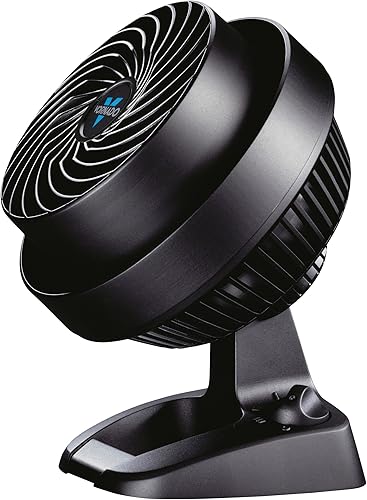
The best best air circulator fans include the Vornado 660 Large Air Circulator for shared living rooms, the Vornado 530 Compact Air Circulator for crowded desks, and the Vornado 533DC Small Air Circulator for draft-sensitive sleepers.
On this page (7 sections)
- How we chose the best air circulator fans
- Air circulator fan comparison
- Best air circulator fans for different rooms
- How do you choose the best air circulator fan for your space?
- Where should you put an air circulator for useful airflow?
- How do you keep an air circulator clean and avoid common mistakes?
- Which best air circulator fan should you buy?
The Vornado 660 Large Air Circulator is the best air circulator fan for most rooms because it pairs simple controls with a head you can aim upward or across an open space. Choose the compact 530 for a crowded desk, or the 533DC when small changes in airflow matter.
Start with the fan's position, then choose the controls and movement you need. A clear path past furniture often matters more than buying the largest body or the longest claimed airflow reach.
For the basics, read what an air circulator fan is and how to use one. Our guide to air circulators vs regular fans helps if you're deciding between room circulation and a breeze aimed at your chair.
Our picks at a glance
-
1

-
2
-
3
 Best for draft-sensitive sleepers
Vornado 533DC Small Air Circulator
7.6/10 our score
See it on Amazon
- 4
 Check it
Vornado 683DC Medium Air Circulator
Best for rooms without tables - 5
 Check it
Rowenta Turbo Silence 12-inch Desk Fan
Best for shared workspaces - 6
 Check it
Vornado VORA 8 Large Air Circulator
Best for bedside adjustments - 7
 Check it
Vornado EOS 9 Large Air Circulator
Best for evening reading corners - 8
 Check it
Vornado STRATA 8 OmniWave Table Fan
Best for changing seating positions
How we chose the best air circulator fans
We compared placement, airflow adjustment and daily controls to choose fans for different room layouts. The 660 leads because it handles general circulation without adding a large set of modes to learn.
The order reflects each model's fit for this search, rather than the number of extras it includes. Remote controls, lights and moving airflow earn their place when they solve a clear need.
We also considered cleaning access and whether the body belongs on a floor, table or pedestal. Noise figures appear only where available, with the relevant speed condition, so they aren't used to rank every fan against one another.
Air circulator fan comparison
Choose the body style first, then compare the controls within that group. A pedestal solves a different placement problem from a small desk fan, even when both are designed to circulate room air.
| Product | Best for | Speeds | Tilt | Size (D x W x H) | Our score |
|---|---|---|---|---|---|
| Vornado 660 Large Air Circulator | shared living rooms | 4 | 90 degrees | 11.75 x 13.5 x 15 in | 8.6 |
| Vornado 530 Compact Air Circulator | crowded desks | 3 | Adjustable | 8.1 x 9.8 x 10.8 in | 7.7 |
| Vornado 533DC Small Air Circulator | draft-sensitive sleepers | Adjustable | 7 x 9.7 x 11.3 in | 7.6 | |
| Vornado 683DC Medium Air Circulator | rooms without tables | Variable | 7.4 | ||
| Rowenta Turbo Silence 12-inch Desk Fan | shared workspaces | 4 | 5.71 x 18.9 x 18.23 in | 7.3 | |
| Vornado VORA 8 Large Air Circulator | bedside adjustments | 10 | 7.0 | ||
| Vornado EOS 9 Large Air Circulator | evening reading corners | 10 | 10.66 x 11.48 x 18.18 in | 6.8 | |
| Vornado STRATA 8 OmniWave Table Fan | changing seating positions | 10 | 11.33 x 10.04 x 13.47 in | 6.6 |
A claimed airflow distance isn't a room coverage rating in square feet. Use the table to narrow your choices, then check whether the fan can send air past the furniture in your actual room.
Best air circulator fans for different rooms
The 660 is the general-purpose pick, while the other models solve narrower needs such as limited desk space, raised airflow or remote adjustments. Read the tradeoffs for the position where your fan will actually sit.
Vornado 660 Large Air Circulator: Best for shared living rooms
- 4 speed settings
- 90-degree tilt
- Vornado claims airflow reach up to 100 ft
A straightforward floor circulator for moving air through a shared room. Its tilting head helps you aim airflow upward or along an open path.
Pros
- Wide tilt range
- Top-mounted push-button controls
- Removable front grille for cleaning
Cons
- Needs more space than the compact models
- Requires reaching the fan to change speed
The Vornado 660 suits a living room or office where a low fan has an open path into the room. Its 90-degree tilt helps you send air upward instead of directing a constant breeze at someone's ankles.
You get 4 speeds through push-button controls on top. That layout suits a fan beside a chair or near the edge of a room, where you can reach it without moving furniture.
Vornado claims airflow reach up to 100 ft, but that doesn't make it a solution for several rooms separated by walls. Think of it as a way to move air through the space around it.
Choose it when you want straightforward circulation and can leave it aimed in a useful direction. Skip it if your routine depends on changing settings from bed or sweeping a breeze between several chairs.
Its removable front grille also gives you access for routine cleaning. Keep the intake clear rather than pressing the back against a sofa.
Vornado 530 Compact Air Circulator: Best for crowded desks
- 3 manual speeds
- Adjustable tilt
- Vornado claims airflow reach up to 65 ft
A compact choice for a desk or nightstand where a larger fan would crowd the surface. Its manual dial keeps daily adjustments simple.
Pros
- Compact tabletop body
- Simple speed dial
- Adjustable airflow direction
Cons
- Only 3 preset airflow levels
- Manual controls need to stay within reach
The Vornado 530 is the practical choice when papers, a monitor or a bedside lamp already fill most of your surface. Its body measures 8.1 x 9.8 x 10.8 in, leaving more placement options than the larger tabletop choices here.
The 3-speed manual dial suits someone who wants a few clear settings. An adjustable tilt head lets you aim above your keyboard or away from your face without moving the whole fan.
Vornado claims airflow reach up to 65 ft. Buy it for its fit and simple operation rather than expecting that figure to describe comfort throughout a furnished room.
Choose the 530 for a nearby surface where the dial will stay easy to reach. Skip it if you often find one preset too weak and the next too strong, since the 533DC addresses that problem.
Keep loose papers out of the airflow path, and avoid balancing the fan on a shelf edge to gain a little more desk space.
Vornado 533DC Small Air Circulator: Best for draft-sensitive sleepers
- Variable speed control
- Brushless DC motor
- Adjustable tilt
A small circulator for people who find preset fan speeds too limiting. The variable dial lets you adjust airflow between the usual low and medium choices.
Pros
- Fine airflow adjustment
- Small tabletop footprint
- Front-mounted dial
Cons
- Requires manual speed changes
- Needs a clear path from its placement
The Vornado 533DC suits people who keep adjusting a fan because the breeze never feels quite right. Its variable speed dial lets you make small changes instead of jumping between a few preset levels.
That is useful beside a bed, where a setting that feels pleasant while reading may feel too strong once you're lying still. It also suits a desk where direct airflow can become distracting during a long work session.
The brushless DC motor sits in a body measuring 7 x 9.7 x 11.3 in. Its adjustable head gives you another way to soften the breeze by changing its direction.
Choose it when precise airflow matters more than remote operation. Skip it if the fan will sit beyond easy reach and you expect frequent adjustments.
Keep the front dial accessible rather than wedging the fan between books or a monitor. If the airflow feels harsh, try aiming slightly past your seat before turning the speed down further.
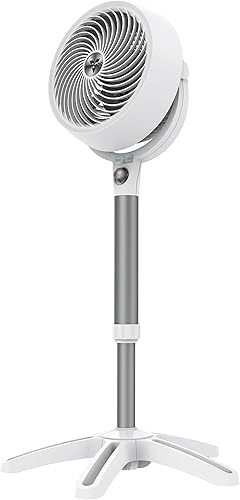
Vornado 683DC Medium Air Circulator: Best for rooms without tables
- Variable speed control
- Height adjusts from 32 to 38 in
- Tool-free assembly
A pedestal circulator that raises airflow without taking over a desk or side table. Choose it when low furniture blocks a floor-level breeze.
Pros
- Raised airflow source
- Variable speed control
- No tools needed for assembly
Cons
- Broad base needs clear floor space
- Controls are on the fan
The Vornado 683DC solves a placement problem: getting airflow above low furniture without giving up a table. Its pedestal adjusts from 32 to 38 in, so check that range against the furniture you want air to pass.
A variable control lets you tune the breeze, and assembly requires no tools. The brushless DC motor makes this another option for buyers who prefer fine adjustment over fixed speed steps.
The main tradeoff is the 18.5 x 18.5 in base. Mark out that area on the floor before buying, especially beside a bed or in a room with narrow walking routes.
Choose it when raised airflow is useful and you have a clear floor position. Skip it if the base would force the fan into a doorway or if you need air delivered well above its maximum height.
Don't solve a height mismatch by putting a pedestal fan on furniture. Pick a stable floor position where the base sits fully supported and the cord stays out of foot traffic.
Rowenta Turbo Silence 12-inch Desk Fan: Best for shared workspaces
- 4 speed settings
- Rowenta claims 38 dB(A) at minimum speed
- 120-degree oscillation
An oscillating table fan for spreading a breeze between nearby seats. Rowenta's minimum-speed noise figure makes it worth considering for quiet work.
Pros
- Broad side-to-side sweep
- Silent Night and Turbo Boost modes
- Adjustable orientation
Cons
- Wide body needs tabletop space
- Manual turn dial
The Rowenta Turbo Silence suits a shared desk area or seating nook where people want a breeze that moves between them. Its 120-degree automatic oscillation spreads direct airflow rather than keeping it aimed at one chair.
Rowenta gives a minimum-speed noise figure of 38 dB(A). That is useful context for quiet work, but it applies to the lowest setting, not the full speed range.
The 4 settings include Silent Night and Turbo Boost, with a manual turn dial. Choose it if you want distinct low and high options and expect to keep the controls nearby.
Despite the desk-fan name, its body is 18.9 in wide and 18.23 in tall. It belongs on a surface with room around it, rather than squeezed beside a laptop.
Skip it for a narrow nightstand or if remote adjustments are central to your routine. Position it so the useful part of the sweep crosses the occupied seats instead of spending most of its travel facing an empty wall.
Vornado VORA 8 Large Air Circulator: Best for bedside adjustments
- 10 speed settings
- OmniWave multi-axis oscillation
- RF remote and 12-hour timer
A floor circulator for people who adjust airflow after settling into bed or a chair. Its remote, timer and several airflow modes support changing routines.
Pros
- Remote included
- Control lock
- Removable grille and blade
Cons
- More controls to learn
- Heavier than the compact tabletop models
The Vornado VORA 8 suits someone who changes airflow after settling into bed or a lounge chair. Its RF remote and 12-hour shut-off timer reduce the need to get up for routine adjustments.
There are 10 speeds and OmniWave multi-axis oscillation. Whole Room Circulation, Cyclic, Sleep and Breeze modes give you a choice between circulation and airflow patterns that change over time.
Choose it if those patterns match your routine, such as wanting airflow to taper while you rest. Skip it if you prefer one steady setting and would rarely use the remote.
The body measures 10.88 x 11.52 x 15.38 in. Allow extra space for movement rather than treating those measurements as the entire operating area.
A control lock helps prevent unwanted setting changes, while the removable grille and blade support cleaning access. Start with a steady setting to find a comfortable strength before trying the changing modes, so you know which part of the airflow you want to adjust.
Vornado EOS 9 Large Air Circulator: Best for evening reading corners
- 10 speed settings
- OmniWave multi-axis oscillation
- Light settings and Lamp Mode
A circulator that combines airflow with ambient lighting. It suits a reading corner or lounge where both functions would see regular use.
Pros
- Backlit remote with magnetic storage
- Detachable magnetic grille
- Several airflow modes
Cons
- Lighting adds little for airflow-only buyers
- Taller than the 660 and VORA 8
The Vornado EOS 9 makes sense in an evening reading corner where ambient light and airflow would both get regular use. Its light settings and Lamp Mode are the main reason to choose it over a simpler circulator.
Airflow options include 10 speeds, multi-axis oscillation and Whole Room Circulation, Cyclic, Breeze and Sleep modes. The backlit RF remote has magnetic storage, giving you a place to return it after use.
Choose it when those combined functions suit the room. Skip it if you already have lighting you like and mainly need a steady breeze, since the extra functions won't solve a placement problem.
The body stands 18.18 in tall, so check clearance beneath shelves or beside low furniture. Leave space for movement as well as the stationary body.
Its magnetic grille detaches for cleaning, and Vornado says SafeStop shuts the unit off when the grille disconnects. Still switch off and unplug the fan before cleaning; a shut-off feature doesn't replace that basic step.
Vornado STRATA 8 OmniWave Table Fan: Best for changing seating positions
- 10 speed settings
- Panoramic and vertical oscillation
- RF remote and 12-hour timer
A tabletop choice for directing moving air across seats and heights. Its selectable motion ranges suit spaces where a fixed breeze misses part of the seating area.
Pros
- Selectable horizontal and vertical sweep
- Remote included
- Removable grille and blade
Cons
- Needs clearance for movement
- Deeper body than the 530 and 533DC
The Vornado STRATA 8 suits a room where people sit at different positions or heights. It offers 90- or 180-degree panoramic oscillation and 60- or 90-degree vertical oscillation, giving you more control over where the moving breeze travels.
Its 10 speeds, Breeze Mode and RF remote suit a shared table or sideboard position. A 12-hour shut-off timer helps if you want airflow for only part of the evening.
Choose it when both horizontal and vertical movement have a purpose in your setup. Skip it if you only need a steady breeze toward one chair, since a simpler compact model can handle that job.
The body measures 11.33 x 10.04 x 13.47 in. Its depth matters on shallow shelves, and the moving head needs clearance from curtains, lamps and nearby objects.
The grille and blade are removable for cleaning. Use the narrowest sweep that reaches your seats first, since a wider setting can send much of the breeze toward areas nobody occupies.
How do you choose the best air circulator fan for your space?
Choose a fan by working through placement, airflow pattern and control access, in that order. These decisions narrow the field more usefully than starting with the highest speed count.
Which air circulator fan size fits your room?
The right size fits a stable position with clear intake and outlet paths. Measure depth and width, then check height against shelves, window ledges and the furniture the air needs to pass.
A tabletop model uses valuable surface space but puts airflow closer to seated height. A floor model leaves the desk free, while a pedestal raises the fan without needing furniture beneath it.
Don't size a fan from claimed reach alone. A long, open room and a short room crowded with sofas present different airflow paths, even if their floor areas are similar.
Should the breeze stay fixed or move?
Choose a fixed direction when you want steady personal airflow or a clear circulation path. Choose oscillation when several people want the breeze to pass across their seats.
Moving airflow means each position receives the direct breeze only during part of the sweep. If you dislike that rise and fall, a well-aimed fixed fan may feel more comfortable.
Multi-axis movement is useful when vertical coverage matters, such as reaching both a low chair and a taller work surface. It adds little if every occupied position sits along the same narrow path.
Which controls will you actually use?
Manual controls work well when the fan sits within reach and stays on one setting. A remote is more useful across a room, beside a bed with limited access, or for someone who finds bending difficult.
Variable control helps when small airflow changes matter. More preset speeds provide additional choices, but mode names and speed counts don't tell you which setting will feel comfortable at your seat.
A timer is worth having if you routinely want the fan to stop before morning or after a work period. Don't pay for it solely to leave it unused while the fan runs continuously.
How should you weigh noise and electricity use?
Choose for the speed you expect to use, since a quiet minimum setting says little about maximum-speed sound. Room acoustics, distance and vibration through furniture also affect what reaches your ears.
Don't compare noise numbers as if they share identical measurement conditions. The goal is enough useful airflow at a sound level that suits reading, conversation or sleep.
For electricity use, wattage and running time matter more than the motor label alone. Our guide to how much electricity a fan uses explains how to estimate consumption without assuming every DC fan uses the same amount.
Where should you put an air circulator for useful airflow?
Put it where air can enter freely and leave along an open path. Start with a safe position, then adjust direction before increasing speed.
Set up for the result you want
For personal cooling, aim airflow toward your occupied area and begin low. If a constant draft feels unpleasant, angle the fan past you or use a sweep that reaches other seats.
For room circulation, try aiming into the open part of the room or upward, away from nearby obstacles. Follow the fan's instructions for clearance, and adjust one thing at a time so you can tell what helps.
With air conditioning, use the fan to move conditioned air toward the occupied area. Keep it clear of the AC intake and outlet rather than crowding both appliances into the same corner.
Fix blocked airflow before adding speed
A sofa back, hanging blanket or closed doorway can interrupt the path you're trying to create. Move the fan to a clearer position before deciding it lacks power.
Leave room behind the intake as well as in front of the grille. A fan pushed against a curtain can draw the fabric toward it and lose its clear air path.
Keep cords out of walkways and away from places where furniture can pinch them. Use a suitable outlet and follow the manual's electrical instructions rather than stretching a cord across the room.
How do you keep an air circulator clean and avoid common mistakes?
Keep the grille clear of dust and use the fan only in a stable, suitable indoor position. Cleaning access matters most when you can reach the fan easily enough to maintain it regularly.
Clean without forcing parts apart
Switch off and unplug the fan before cleaning. Follow its manual for removing the grille or blade, since access methods differ between models.
Use a soft brush or vacuum attachment for loose dust where the instructions allow. Keep moisture away from the motor and controls, and let cleaned parts dry fully before reassembly.
Avoid forcing a grille that doesn't release as expected. Check the instructions instead, and return every guard and fastener to its proper position before using the fan again.
Don't confuse circulation with cooling the air
A fan helps you feel cooler through moving air; it doesn't refrigerate the room. Running it in an empty, closed room generally won't leave cooler air waiting for you later.
Use air conditioning or another suitable cooling plan when you need actual heat removal. Open-window ventilation helps only when outdoor conditions support it, so don't draw hotter outdoor air inside just because a fan is available.
Match the fan to the setting
These picks are indoor fans, so keep them away from rain, splashes and wet surfaces. Don't assume a room circulator is suitable for a damp workshop or dusty garage.
For that setting, compare garage and shop fans before choosing. Also avoid moving a fan by its cord or placing it on an unstable stack to change its height.
Which best air circulator fan should you buy?
Choose the Vornado 660 if you have an open floor position and want simple room circulation. Before ordering the best air circulator fan for your space, mark out its position and confirm that air can pass the furniture around it.
Pick the 530 for a crowded desk, or the 533DC when small airflow adjustments matter. Choose the 683DC when the missing piece is height rather than more modes.
For a shared tabletop breeze, consider the Rowenta. Choose the VORA 8 for adjustments from bed, the EOS 9 when ambient lighting has a clear role, or the STRATA 8 when your seating layout benefits from horizontal and vertical movement.
If the bedroom is your main concern and you're still unsure about the body style, compare room fans for bedrooms. That choice should come before deciding how many speeds or extra modes you want.
Our top 3 picks at a glance
-
1
-
2
-
3
Best for draft-sensitive sleepers
Vornado 533DC Small Air Circulator
7.6/10 our score
See it on Amazon
Frequently asked questions
What is the best air circulator fan for most rooms?
The Vornado 660 Large Air Circulator is our top choice for general room circulation because it combines simple speed controls with a wide tilt range. Choose a compact model if your only suitable spot is a crowded desk, or a pedestal model when furniture blocks airflow near the floor.
Is an air circulator different from a regular fan?
An air circulator is designed to move air around a room, while many ordinary fans focus on a direct breeze; placement and airflow direction still matter with either type. Our guide to air circulators and regular fans explains which approach suits personal cooling and shared spaces.
Should an air circulator oscillate?
Choose oscillation when you want a breeze to pass across several seats, rather than stay on one person; a fixed direction can work well for circulating air along a clear path. Multi-axis motion adds vertical movement, which is useful when the places you want to reach sit at different heights.
Can an air circulator replace air conditioning?
An air circulator cannot replace air conditioning because it moves air without removing heat through refrigeration; it can help you feel cooler and spread conditioned air through an occupied space. Read whether a fan cools a room before relying on airflow to handle a hot room.
How do I choose the right size air circulator?
Choose the size that fits a safe position with an open airflow path, accessible controls and clearance for movement; measure the full surface or floor area, including space behind the intake. A larger fan placed behind furniture can be less useful than a smaller one with a clear path.


