Dreo vs Vornado Fans: Which Brand Is Better? (November 2026)
In this Dreo vs Vornado comparison, choose DREO for an adjustable standing fan with remote control and oscillation. Choose the Vornado 660 for floor circulation or the compact 530 for a desk or bedside table.
On this page (9 sections)
- Dreo vs Vornado: which fan suits your room?
- Who should buy each model, and who should skip it?
- How do their controls affect everyday comfort?
- Which model fits a small space without crowding it?
- Do airflow reach and noise figures settle the choice?
- How should you set up the fan for useful airflow?
- What care does each fan need?
- Which buying and use mistakes should you avoid?
- Which Dreo vs Vornado fan should you pick?
Choose DREO for remote adjustments and a sweeping breeze, the Vornado 660 for a low floor circulator, and the Vornado 530 for a crowded desk or bedside table. This Dreo vs Vornado comparison comes down to placement and daily use.
These are 3 specific models, so the choice doesn't settle every comparison between the brands. A standing fan beside a bed solves a different problem from a compact circulator beside a keyboard.
Start by deciding where the fan will go and who needs to feel its airflow. A fan helps you feel cooler, but it doesn't lower room temperature; see how a fan affects room comfort before choosing one for a hot room.


Dreo vs Vornado: which fan suits your room?
DREO suits changing needs across a room; the Vornados suit a chosen floor or tabletop position. Pick the spot first, then choose the fan whose shape and controls work there.
A bed frame, sofa arm or desk can block airflow from a low fan. Raising or redirecting the airflow may solve that problem, but choosing a higher speed won't move air through furniture.
The DREO standing fan makes sense when you need airflow above nearby furniture. The 660 works better where a low fan has an open path, while the 530 belongs on a stable surface with room around it.
Dreo vs Vornado for bedrooms
Choose DREO if you want to adjust the fan without getting out of bed. Its remote, beep-muting option and timer of up to 8 hours fit a bedtime routine.
The 530 suits a bedside table when you can reach the controls without leaning across a lamp or drink. The 660 can sit on the floor, but check that the bed won't block the direction you want to aim it.
For 2 sleepers, decide whether both want a passing breeze or one person wants steady airflow. Oscillation shares air between positions, but each person feels it only while the head points their way.
For other shapes and room layouts, compare our guide to room fans for bedrooms.
Who should buy each model, and who should skip it?
Buy the model that removes your main placement or control problem. Skip one that forces you to accept a daily nuisance, even if it has an appealing airflow claim.
DREO: choose it for a shared seating area
The DREO suits a living room where you alternate between a sofa and chair, or a bedroom where settings change during the evening. It offers several ways to direct air without moving the whole fan.
Its stand adjusts from 38–42 inches, with 90° horizontal oscillation and a 105° pivoting head. That combination helps when airflow needs to reach above furniture or sweep between nearby people.
Skip it if you need a fan that stays below a windowsill or fits on a table. A tall stand also needs a clear floor spot where people won't brush past it.
Vornado 660: choose it for a permanent floor spot
The 660 suits a room with an open floor position and a clear route for airflow. Its 90° tilt lets you aim upward rather than leaving the breeze at ankle height.
Choose it when you expect to set the direction and leave it alone. The top-mounted push buttons are practical if you can reach them easily from where the fan sits.
Skip it if furniture blocks every low position, or if you'll often want adjustments from bed. Its body is also wider and deeper than the 530, so it needs more than a narrow gap beside a cabinet.
Vornado 530: choose it when surface space matters
The 530 is the best fit here for a small desk, accessible bedside table or office shelf with safe clearance. Its tilt head helps direct air from a raised surface without adding a floor stand.
Skip it if the only available spot is behind a monitor or stack of books. A compact fan still needs a clear intake and outlet, and its manual dial must remain within reach.
It's also a poor match if you want frequent small speed changes from across the room. Choose it because it fits your space and routine, rather than expecting it to copy the standing DREO's controls.
How do their controls affect everyday comfort?
DREO offers finer speed choices and automatic adjustment; the Vornados keep speed selection simple. Choose based on how often you change the breeze, not just the number of settings.
DREO has 8 speeds and auto mode. Auto mode raises the speed by 1 step whenever room temperature rises by 2°F.
That suits a room that warms during the afternoon, especially if you don't want to keep adjusting the fan. Use a fixed speed instead if you prefer steady airflow while reading or sleeping.
The 660 has 4 push-button speeds, while the 530 has a 3-speed manual dial. Those controls suit someone who usually chooses a setting once and leaves it there.
Should you choose oscillation or a fixed direction?
Choose oscillation to share a passing breeze; choose a fixed direction for steady airflow at one spot. Neither approach is best for every room.
At a desk, a fixed breeze aimed slightly past you may be more comfortable than air that repeatedly crosses your face. In a seating area, sweeping airflow can serve people who sit apart.
Room circulation is a separate goal from feeling air on your skin. Our guide to air circulators and how they differ from ordinary fans explains how to choose between those uses.
Which model fits a small space without crowding it?
The Vornado 530 needs the least surface area, while DREO trades a taller body for a narrow floor footprint. Measure width, depth and clearance before deciding which shape saves useful space.
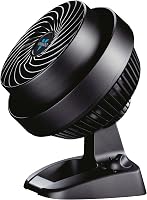
The 530 measures 9.8 inches wide, 10.8 inches high and 8.1 inches deep. The 660 measures 13.5 inches wide, 15 inches high and 11.75 inches deep.
DREO is about 11 inches wide and deep overall. A clear floor spot beside a desk may make it more practical than giving up working space to a tabletop fan.
Allow room for the head to move and for your hand to reach the controls. Keep the cord out of walkways, and avoid positions where a chair or door could strike the fan.
If the fan will move between rooms, consider the route as well as its resting place. The 530 weighs 4.9 pounds, DREO weighs 5.2 pounds, and the 660 weighs 7.3 pounds.
For more shapes to compare, see our guide to air circulator fans for different room setups.
Do airflow reach and noise figures settle the choice?
Use airflow reach as background information, not as a room-size rating. A claimed distance won't tell you whether a breeze can get past your sofa or feel comfortable beside your bed.
Vornado claims air movement up to 100 ft for the 660 and 65 ft for the 530. DREO claims reach up to 90 ft.
DREO gives an airflow capacity of 1000 CFM, compared with 152 CFM for the 530. CFM describes air volume per minute, while reach describes distance; neither number is a recommended floor area.
Don't turn those figures into a precise performance ratio. Without a shared measurement method, they aren't enough to rank how much useful airflow each fan delivers at your seat.
Which is the quieter bedroom choice?
There isn't enough comparable noise information here to name a quietest model. DREO specifies 28.2 dB, but a single figure doesn't describe sound at every speed or distance.
More speed choices can help you find an acceptable balance between breeze and sound. They don't prove that one fan is quieter than another at the airflow level you need.
For bedtime use, start with a low fixed setting and adjust the position before increasing speed. Moving the airflow closer to where it's needed may let you use a gentler setting.
How should you set up the fan for useful airflow?
Set up for either personal cooling or room circulation, then adjust from there. Trying to achieve both with one unchanged position can leave you with an uncomfortable draft and poor circulation.
For a breeze at your seat or bed
Place the fan where furniture won't intercept the airflow, then aim it toward your occupied area. Start low and increase speed only until the breeze feels useful.
If direct airflow bothers your eyes or moves papers, aim slightly beside you. A stronger blast straight at your face isn't the only way to feel more comfortable.
Use oscillation when several people want a share of the breeze. Turn it off when one person prefers continuous airflow at a single seat.
For mixing air through the room
Give the fan an open route across the room or angle it upward to encourage air movement beyond floor level. Avoid pointing it straight into the back of a nearby sofa.
Change one thing at a time: position, angle, then speed. Check comfort where you actually sit, rather than judging the setup only while standing beside the fan.
If you use air conditioning, keep its vents clear and position the fan to help move air into the occupied area. For more setup ideas, read what an air circulator fan does.
What care does each fan need?
Regular dust removal and correct reassembly matter more than the brand name. Unplug the fan before cleaning and follow its manual for any part you plan to remove.
DREO has a detachable blade and separate front and rear grills. The 660 has a removable front grill, giving access for cleaning without assuming its other parts detach in the same way.
Use the 530's own instructions for access and cleaning. Don't pry at clips or pull a blade simply because another fan comes apart that way.
Check intake and outlet areas when you notice dust buildup. Keep moisture away from the motor, controls and plug, and let any permitted washable parts dry fully before reassembly.
For the standing DREO, our guide to cleaning a pedestal fan gives useful care context. Our tower fan cleaning guide covers general dust-removal habits, but use your model's manual for opening steps.
DREO also includes an aroma pad, but fragrance doesn't remove dust or clean room air. Leave that feature out of your buying decision if your main need is airflow.
Which buying and use mistakes should you avoid?
Avoid choosing by the largest airflow claim while overlooking the outlet, furniture and controls. A fan that fits your routine is more useful than one you struggle to position.
- Choosing by brand alone: These models have different shapes and controls, so compare the actual fan you plan to buy.
- Confusing tilt with oscillation: Tilt sets the airflow angle; horizontal oscillation moves the direction from side to side.
- Crowding the fan into a gap: Leave intake and outlet clearance according to the manual, even when the body fits.
- Expecting automatic temperature control: DREO's auto mode changes fan speed; it doesn't work like an air conditioner thermostat.
- Assuming motor type tells you running cost: A fair cost comparison needs power use and operating hours, not just speed counts.
- Ignoring electrical compatibility: Both Vornado models here are intended for U.S. voltage requirements and U.S. use.
The 530 is specified for 120 volts, and Vornado warns against using voltage or frequency converters with it. Choose a locally suitable model if you're shopping outside the U.S., rather than planning around an adapter.
Vornado backs both models with support that includes replacement for up to 5 years, subject to its terms. Check those terms if warranty coverage is a deciding factor.
Which Dreo vs Vornado fan should you pick?
Pick DREO when reaching the airflow and controls is your main problem. Its standing shape and remote suit a bed or shared seating area where a low, manually adjusted fan would be awkward.
Choose the Vornado 660 when you have an open floor spot and want to aim the airflow once. Choose the 530 when a small, reachable tabletop position is the best place for a fan.
Before ordering, mark the intended spot and trace the cord route to an outlet. That simple check can settle the Dreo vs Vornado decision more clearly than the longest claimed reach.
If a tall, narrow fan better suits your room, compare Dreo vs Levoit tower fans next.
Frequently asked questions
Is Dreo or Vornado better for a bedroom?
DREO is the better fit when you want to change settings from bed or share a sweeping breeze; the Vornado 530 suits an accessible bedside table, while the 660 suits floor placement. Choose around your furniture and control needs; these models don't support a fair noise ranking across brands.
Do Dreo and Vornado fans oscillate?
The DREO model here has horizontal oscillation that sweeps air from side to side; the Vornado 530 and 660 use adjustable tilt to aim airflow. Choose DREO if you want the breeze to move between nearby seats, or a Vornado if you prefer to keep airflow aimed in one direction.
Which Vornado fan is better, the 530 or 660?
The 660 is the better fit for a dedicated floor position, while the 530 suits a desk or bedside table with limited space; the 660 adds a fourth speed and top-mounted buttons. Pick the 530 when its smaller footprint solves a placement problem, rather than choosing by claimed airflow reach.
Can a fan cool an entire room?
A fan can make people feel cooler by moving air, but it doesn't lower room temperature like an air conditioner; a circulator can also help mix room air when it has a clear path. Read our guide on what a fan can do for a room before expecting cooling from airflow alone.