7 Best Quiet Fans for Bedrooms (November 2026)
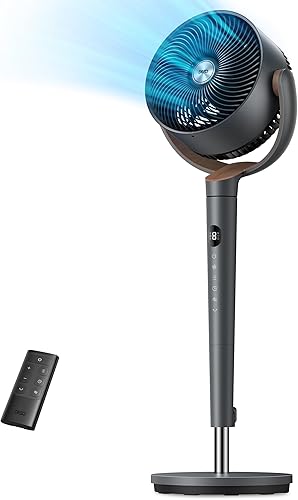
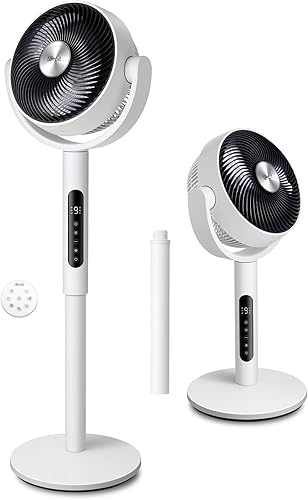
The best quiet bedroom fans include the DREO 100ft Airflow Pedestal Fan for shared bedrooms, the Levoit 2-in-1 Pedestal and Tabletop Fan for flexible placement, and the Levoit 120-Degree Standing Fan for light-sensitive sleepers.
On this page (8 sections)
- How we chose a quiet fan for bedroom use
- Quiet bedroom fan comparison
- Which quiet bedroom fan fits your room?
- How should you compare noise before buying?
- Should you buy a tower, pedestal or circulator?
- How should you set up a bedroom fan for quieter use?
- How do you keep a bedroom fan from getting louder?
- Which quiet fan for your bedroom should you choose?
The DREO 100ft Airflow Pedestal Fan is our top quiet fan for bedroom use because it gives you several ways to aim and adjust a breeze. Choose the Levoit 2-in-1 if you need floor or tabletop placement, or the Levoit 120-Degree Standing Fan if display light and control sounds bother you.
The right fan feels comfortable at a speed you can sleep beside. A powerful maximum setting matters less than a useful low setting, clear airflow to the bed and controls that suit your routine.
For a wider look at styles, see our guide to room fans for bedrooms. You can also compare more tower fans or read about quiet fan settings and nighttime use.
Our picks at a glance
-
1
-
2
 Best for flexible placement
Levoit 2-in-1 Pedestal and Tabletop Fan
8.0/10 our score
See it on Amazon -
3
- 4
 Check it
DREO Standing Fan, 120 by 100 Degrees
Best for indirect room circulation - 5
 Check it
Antarctic Star T42 Bladeless Tower Fan
Best for easy tower upkeep - 6
 Check it
Levoit Smart Standing Tower Fan, 26ft/s
Best for scheduled bedtime routines - 7
 Check it
Rowenta Fresh 180-Degree Oscillating Fan
Best for widely spaced beds
How we chose a quiet fan for bedroom use
Useful low-speed airflow and nighttime controls drove these choices. We compared noise information, speed adjustment, airflow direction, display behavior and cleaning access, with scores reflecting those features and their fit for bedroom use.
A minimum noise number describes one operating condition, not the full speed range. Figures from different brands may also use different distances or methods, so they don't form a reliable quietest-to-loudest ranking.
We favored features that solve a clear bedroom problem. Adjustable direction helps air reach a high mattress, removable parts simplify care, and display controls matter when the fan faces your pillow.
Quiet bedroom fan comparison
Compare noise figures alongside their speed conditions, then choose the placement and controls you need. A fan with a slightly higher stated minimum may still suit you better if it delivers comfortable airflow from a better position.
The table separates low-speed claims from figures without a matching speed. Use it to narrow your choices before reading the practical trade-offs below.
| Product | Best for | Noise | Airflow | Oscillation | Our score |
|---|---|---|---|---|---|
| DREO 100ft Airflow Pedestal Fan | shared bedrooms | DREO describes quiet low-speed operation | 1150 CFM | 120° horizontal; 120° manual vertical tilt | 8.8 |
| Levoit 2-in-1 Pedestal and Tabletop Fan | flexible placement | Levoit states 20 dB at lowest setting | 1024 CFM | 90° horizontal; manual vertical adjustment | 8.0 |
| Levoit 120-Degree Standing Fan | light-sensitive sleepers | Levoit states 20 dB minimum | 908 CFM | 90° horizontal; 120° manual vertical adjustment | 7.5 |
| DREO Standing Fan, 120 by 100 Degrees | indirect room circulation | DREO states 20 dB; speed unspecified | 1150 CFM | 120° horizontal and 100° vertical | 7.4 |
| Antarctic Star T42 Bladeless Tower Fan | easy tower upkeep | Antarctic Star states 22 dB at low speed | Over 30 m³/min claimed | 7.2 | |
| Levoit Smart Standing Tower Fan, 26ft/s | scheduled bedtime routines | Levoit states 25 dB minimum | 1444 CFM | 7.0 | |
| Rowenta Fresh 180-Degree Oscillating Fan | widely spaced beds | No published decibel figure | 180° | 7.0 |
Which quiet bedroom fan fits your room?
Choose by your main constraint: placement, light, airflow direction or controls. The products below stay in score order, but a lower-scoring model can be the better fit for a specific bedroom.
DREO 100ft Airflow Pedestal Fan: Best for shared bedrooms
- DC motor
- 9 speeds and 4 modes
- 120° horizontal oscillation
- 120° manual vertical tilt
A wide sweep and adjustable head help you share a breeze or direct air above the bed. Choose it for flexible placement and speed control.
Pros
- Several steps for adjusting airflow
- Remote controls horizontal oscillation
- Adjustable height
Cons
- No published decibel figure
- Vertical tilt is manual
The DREO 100ft Airflow Pedestal Fan suits a shared bedroom where airflow needs may change from night to night. Its 9 speeds and 4 modes give you more room to adjust than a fan with only a few fixed settings.
Horizontal oscillation covers 120°, while the head tilts vertically through 120° by hand. You can aim it above the bedding for room circulation or adjust it toward the bed for a direct breeze.
Height adjusts from 37 to 42 in, and the remote controls horizontal oscillation. An 8-hour timer is useful if you want the fan to stop after you fall asleep.
DREO describes quiet low-speed operation but doesn't give a decibel figure for this model. Buy it for adaptable airflow; skip it if a stated noise level is central to your shortlist.
Before choosing its position, check that the head can send air past the mattress edge. A clear path can save you from raising the speed just to overcome blocked airflow.
Levoit 2-in-1 Pedestal and Tabletop Fan: Best for flexible placement
- 20 dB at the lowest setting
- 5 speeds and Turbo mode
- 90° horizontal oscillation
- Detachable grille and blades
Two height options let this fan work beside the bed or on a suitable tabletop. Removable blades and a detachable front grille make routine dust removal easier.
Pros
- Floor or tabletop setup
- Noise figure tied to lowest setting
- Detachable grille and blades
Cons
- Fewer speed steps than several alternatives
- Vertical adjustment is manual
The Levoit 2-in-1 Pedestal and Tabletop Fan is the most useful choice here if your bedroom layout may change. Its 2 height options let you choose floor placement or a suitable tabletop rather than committing to one position.
Levoit states 20 dB at the lowest setting, which ties the noise claim to a clear operating point. There are 5 regular speeds and a Turbo mode, with remote and top-panel controls.
Its horizontal oscillation covers 90°, and vertical direction adjusts manually. That combination suits a defined sleeping area where you want to set the upward angle once, then control the side-to-side movement from bed.
The detachable front grille and blades are another reason to choose it if dust removal is a priority. Follow the care instructions before removing or washing any part.
Skip this model if you want very small steps between airflow levels. For tabletop use, measure the supporting surface and keep the fan away from edges, loose objects and anything that could block its intake.
Levoit 120-Degree Standing Fan: Best for light-sensitive sleepers
- 20 dB minimum noise level
- 9 speeds
- Sleep and Eco modes
- 90° horizontal swing
Sleep mode turns off the display and disables selection sounds after 5 seconds. It also changes airflow overnight, so choose it if you welcome automatic speed changes.
Pros
- Sleep mode turns off display and selection sounds
- Manual or temperature-based speed control
- Remote and touchpad controls
Cons
- Sleep mode changes speed overnight
- Direction resets when powered on
The Levoit 120-Degree Standing Fan suits sleepers who want a dark display and quiet controls at bedtime. In Sleep mode, the display turns off and selection sounds stop after 5 seconds.
That mode also reduces speed after an hour and then adjusts airflow with room temperature. Choose it if you welcome changing airflow; use Normal mode if a steady sound matters more.
Levoit states 20–23 dB for speeds 1–3, compared with 42–46 dB for speeds 7–9. This makes the low-speed range the sensible place to start for nighttime use.
Despite the product name, horizontal oscillation is 90°; the 120° figure refers to manual vertical adjustment. Keep that distinction in mind if you're trying to cover 2 beds.
The fan's direction resets when powered on, so check its aim before settling down. Skip it if you want to switch it on each night without revisiting direction, or if automatic speed changes are the feature you most want to avoid.
DREO Standing Fan, 120 by 100 Degrees: Best for indirect room circulation
- 120° horizontal and 100° vertical oscillation
- 9 speeds and 3 modes
- DC motor
- Remote and touch controls
Movement in both directions suits bedrooms where you want to circulate air beyond one fixed spot. Its temperature-based Auto mode offers another way to manage airflow.
Pros
- Horizontal and vertical oscillation
- Adjustable height
- Remote and touch controls
Cons
- Noise figure is not tied to a speed
- Requires a compatible 120 V supply
The DREO Standing Fan, 120 by 100 Degrees suits a bedroom where you want air movement beyond a fixed stream toward the bed. It combines 120° horizontal and 100° vertical oscillation.
That makes it worth considering if you dislike a constant breeze on your face but still want air moving through the room. Its height adjusts from 37 to 42 in, helping you place the airflow above furniture.
There are 9 speeds, 3 modes, and remote and touch controls. Auto mode responds to room temperature, including a 1-level speed reduction for each 2°F drop.
DREO gives a 20 dB figure without tying it to a speed. Choose this model for its moving airflow pattern rather than assuming that figure applies throughout the range.
Skip it if you only need one fixed bedside breeze and would rarely use vertical movement. Also check electrical compatibility: DREO specifies a 120 V supply and warns against connecting this model to a higher-voltage power grid.
Antarctic Star T42 Bladeless Tower Fan: Best for easy tower upkeep
- 22 dB at low speed
- 6 speeds and 4 modes
- Display dims after 30 seconds
- Removable rear grille
A rear grille that removes without tools gives you useful access for cleaning. Automatic display dimming and built-in remote storage also suit bedside use.
Pros
- Rear grille removes without tools
- Display dims automatically
- Remote storage on the fan
Cons
- Dimming is different from confirmed full blackout
- Base needs 12.28 by 12.28 in of floor space
The Antarctic Star T42 Bladeless Tower Fan suits buyers who want accessible cleaning and simple bedside storage. Its rear grille removes without tools, and the remote has a dedicated slot on the back.
The display dims 30 seconds after use. That helps reduce light, but dimming and complete blackout are different, so the Levoit standing model above is the clearer choice if you need a confirmed display-off function.
Antarctic Star states 22 dB at low speed. You get 6 speeds and Normal, Nature, Sleep and Smart modes, plus a child lock that prevents changes through the controls.
Measure for the base rather than judging the slender body alone. This tower needs 12.28 by 12.28 in of floor space, with additional clearance around its air openings.
Choose it if you'll value regular cleaning access and a place to keep the remote. Skip it if that base crowds your bedside walkway; our guide to choosing a tower fan explains the placement details to check first.
Levoit Smart Standing Tower Fan, 26ft/s: Best for scheduled bedtime routines
- 25 dB minimum noise level
- 12 speeds and 4 modes
- VeSync app control
- Alexa and Google Assistant support
Custom schedules and app controls suit a bedroom with a regular evening routine. Adjustable up-and-down airflow adds useful direction control to the tower format.
Pros
- Customizable schedules
- App, voice and remote control
- Fine speed adjustment
Cons
- Smart features require setup
- Automatic modes can change the sound overnight
The Levoit Smart Standing Tower Fan, 26ft/s suits a regular bedtime routine that you want to set through schedules. VeSync app control, Alexa and Google Assistant support let you manage it beyond the included remote.
Its 12 speeds provide the finest speed selection in this group. That is useful if one setting on a simpler fan feels too weak and the next feels too strong.
Levoit states a 25 dB minimum noise level. The fan also offers 4 modes, a 1-to-24-hour timer, customizable schedules and temperature-based Auto mode.
Adjustable up-and-down airflow is a useful distinction for a tower beside a bed. It gives you a way to change the breeze's height without putting the fan on furniture.
Buy it if schedules and detailed control will become part of your routine. Skip it if you want to avoid app setup and would mostly leave it at one speed; a remote-only model can meet that need with fewer steps.
Rowenta Fresh 180-Degree Oscillating Fan: Best for widely spaced beds
- 180° oscillation
- 3 speeds
- 8-hour timer
- Remote with built-in storage
A broad horizontal sweep suits beds or seating spread across the room. Choose it for coverage and simple controls rather than fine speed adjustment.
Pros
- Broad horizontal sweep
- Remote storage
- Removable rear grid
Cons
- No published decibel figure
- Only 3 speeds
The Rowenta Fresh 180-Degree Oscillating Fan suits a room with widely spaced sleeping or seating positions. Its 180° horizontal sweep covers a broader stated arc than the other fans with specified horizontal angles here.
That wide sweep has a trade-off: the breeze spends part of each cycle pointing elsewhere. It makes sense for shared coverage, but less sense if you want uninterrupted airflow on one side of a bed.
There are 3 speeds, an 8-hour digital timer and a remote that stores in the fan. Automatic temperature detection, speed and shut-off functions offer alternatives to leaving it at one manual setting.
A removable rear grid provides cleaning access, while the integrated handle helps with moving it. These features suit a fan that serves the bedroom at night and another room during the day.
Choose Rowenta for broad coverage and a short set of speed choices. Skip it if you need fine airflow adjustment or a published decibel figure, since Rowenta doesn't give a noise number for this model.
How should you compare noise before buying?
Look for the speed behind the noise claim, then decide how much airflow you need from that setting. A very low minimum is useful only if the fan still reaches your sleeping position comfortably.
What makes a quiet fan for a bedroom sound different?
A steady rush of air can be easier to ignore than a whine, pulsing breeze or repeated change in motor speed. Decibel figures describe sound level, but they don't fully describe its character.
Your room changes the experience too. Hard floors and bare walls can make sound more noticeable, while distance and the fan's position affect what reaches your pillow.
If you prefer a constant background sound, start with a fixed speed. Nature, Auto and Sleep modes may change airflow, and those changes can draw attention even when the average sound is low.
Should you choose the strongest fan?
Choose enough airflow to reach the bed at a comfortable setting, rather than chasing the largest maximum number. Airflow capacity, outlet speed and claimed reach describe different things and shouldn't be treated as interchangeable measures.
Maximum output is useful for circulating air before bed or assisting air conditioning. Overnight, the more useful question is whether you can reduce the breeze without losing it completely.
A fan also needs a clear path. Buying extra power to push air through hanging bedding or around a large dresser is usually less useful than finding a better location.
How much weight should you give a DC motor?
A DC motor is a useful feature, but it isn't a complete noise verdict. Blade design, operating speed, assembly and vibration also affect the sound you hear.
Give more weight to a suitable low-speed range and clear nighttime controls than to the motor label alone. Those are the features you'll adjust when the room becomes quiet.
Should you buy a tower, pedestal or circulator?
Choose the shape that can deliver air to your bed from a safe, practical position. A pedestal offers head-height adjustment, while a tower spreads airflow through a tall outlet.
A high mattress, thick bedding or a bed frame can block air from a low position. Adjustable height or upward direction becomes more useful in that layout than a narrow-looking body.
For a cramped room, measure the entire base and leave a clear walking route. A tower's slim upper section doesn't tell you how much floor space its base needs.
Circulation and direct cooling are also different goals. Our air circulator versus fan guide explains which airflow pattern suits a whole room and which suits a person.
Is oscillation better for a shared bed?
Oscillation helps share airflow, but each person receives a breeze only during part of the sweep. A fixed direction works better if one sleeper wants continuous airflow and the other wants little.
Try aiming across the lower part of the bed rather than directly at both faces. Vertical adjustment can also help you keep air moving without a constant stream on your upper body.
Which controls are worth prioritizing?
Choose a remote if you mainly need speed changes from bed. Choose schedules if you want the same routine each evening, and a timer if you want the fan to stop after a set period.
Treat display behavior as a separate decision. A dim screen may still be visible in a dark room, while a display-off mode addresses that concern more directly.
A child lock can prevent accidental setting changes. It doesn't replace stable placement, clear cords or keeping fingers and objects away from openings.
How should you set up a bedroom fan for quieter use?
Start with stable placement and a clear air path, then adjust speed from the bed. Fixing the position first can reduce the need for a louder setting.
- Assemble it fully. Follow the instructions for the base, grille and other fasteners, then check that it stands evenly.
- Choose a clear location. Keep the intake and outlet away from curtains, bedding and walls according to the required clearances.
- Set the direction while awake. Aim toward your sleeping position for a direct breeze or above it for indirect circulation.
- Start low. Lie in your normal position and increase speed only until the airflow feels useful.
- Add movement last. Turn on oscillation and decide whether the changing breeze improves comfort or becomes distracting.
- Check nighttime controls. Try display settings, remote buttons and the chosen mode before relying on them overnight.
Avoid placing a floor fan on a chair or an improvised stand to gain height. Choose a model designed for your placement, and route the cord where it won't catch your feet.
Don't press the base against furniture to save a little space. Contact can pass vibration into a bed frame, dresser or wall and make the sound more noticeable.
A fan moves air but doesn't lower the room's temperature. Read whether a fan actually cools a room if you're deciding how to use one alongside air conditioning or ventilation.
How do you keep a bedroom fan from getting louder?
Remove dust regularly and address a new sound early. Dust can restrict airflow, while loose assembly or contact with nearby objects can add rattles.
Unplug the fan before cleaning, and use only the access points and methods described in its manual. Removable grilles don't mean the motor, controls or every internal part can get wet.
Inspect accessible openings as part of your normal room cleaning. If airflow seems weaker, clean the fan before compensating with a higher speed.
Follow our guide on how to clean a tower fan for the tower format. For an exposed-head design, see how to clean a pedestal fan.
If a sound appears only during oscillation, check for nearby obstructions and confirm the base sits level. Don't force the head or attempt to lubricate a mechanism unless the instructions call for it.
Use our guide to why a tower fan may get loud or rattle to separate placement and care issues from problems that need service. Stop using a fan that develops scraping, a burning smell or visible cord damage.
Which quiet fan for your bedroom should you choose?
Pick the fan that solves your room's main problem at a comfortable low speed. Use this decision list to make the final choice:
- Shared airflow: Choose the DREO 100ft Airflow Pedestal Fan for flexible direction and several speed steps.
- Floor or tabletop placement: Choose the Levoit 2-in-1, especially if removable blades make care easier for you.
- Display light and control sounds: Choose the Levoit 120-Degree Standing Fan, with a fixed mode available when you want steady airflow.
- Indirect circulation: Choose the DREO Standing Fan, 120 by 100 Degrees for movement both horizontally and vertically.
- Tower cleaning access: Choose the Antarctic Star T42 if its base fits and display dimming meets your needs.
- A regular automated routine: Choose the Levoit Smart Standing Tower Fan for schedules and detailed control.
- Beds spread across a room: Choose the Rowenta Fresh 180-Degree Oscillating Fan for its broad sweep.
Before ordering a quiet fan for bedroom use, measure its intended position and check the airflow path at mattress height. If the style still feels undecided, our bedroom fan guide will help you settle that choice first.
Our top 3 picks at a glance
-
1
-
2
Best for flexible placement
Levoit 2-in-1 Pedestal and Tabletop Fan
8.0/10 our score
See it on Amazon -
3
Frequently asked questions
What noise level is quiet for a bedroom fan?
A low-speed figure around 20 to 25 dB can help you shortlist a bedroom fan, but it isn't a promise of quiet at every speed. Distance, room acoustics and the sound's pitch affect what you hear.
Judge comfort from your pillow at the airflow setting you actually need.
Are tower fans quieter than pedestal fans?
Neither shape is always quieter; the motor, blades, speed and placement matter more than the outline. A pedestal can help you aim a gentle breeze at mattress height, while a tower may fit your layout better.
Our bedroom fan guide compares the main styles and their placement needs.
Which fan features help at night?
Low-speed control, a suitable display setting and a reachable remote are useful starting points. Choose a timer if you want airflow to stop, or a sleep mode if you want overnight adjustments.
Check what that sleep mode does, since changing speed can be distracting if you prefer a steady sound.
How can I make a bedroom fan quieter?
Place the fan on a firm, level surface, clear its air openings and use the lowest comfortable speed. Unplug it before cleaning or checking assembly, and follow its care instructions.
For a new rattle or change in sound, use our guide to why a tower fan gets loud.


