How to Choose a Garage or Shop Fan
Choose a high velocity fan for the job: a Lasko blower for focused airflow, the DEWALT drum fan for an open work area, or the Vornado 80X for adjustable indoor circulation. Check floor space, outlet reach and airflow direction before buying.
On this page (9 sections)
- What should you look for in a high velocity fan?
- Which fan style fits your garage or shop?
- How much airflow does your garage actually need?
- Where should you place a garage fan?
- What power and operating conditions should you check?
- How do you choose controls and noise for long work sessions?
- How should you clean and store a workshop fan?
- What mistakes should you avoid when buying a shop fan?
- Which high velocity fan should you choose?
Choose a high velocity fan by deciding where you need the air: at your body, across a damp surface or through an open work area. A compact blower fits focused tasks, while a larger drum fan makes more sense when clear floor space and broader airflow matter.
The right choice also needs to fit your daily routine. A fan you can carry, aim and plug in safely is more useful than one whose strongest setting you rarely need.
For more garage options, see our best garage and shop fans guide.
What should you look for in a high velocity fan?
Choose a fan that can reach your work position, fit outside traffic paths and run from a suitable outlet. Start with those needs before comparing maximum airflow.
| Factor | What to check | How it changes your choice |
|---|---|---|
| Main task | Personal comfort, surface drying or general circulation | Determines where the air needs to go |
| Fan style | Blower, drum or box design | Changes how the fan fits and aims |
| Airflow | CFM figures where available | Helps compare air volume, with limits across different designs |
| Adjustment | Head movement and speed controls | Helps you avoid an all-or-nothing draft |
| Portability | Weight, handle and storage space | Matters if the fan moves between jobs |
| Power | Cord reach, plug and accessory outlets | Determines safe placement and usable connections |
| Care | Access for cleaning | Matters in dusty workspaces |
A fan helps you feel cooler by moving air over your skin, but it does not refrigerate the room. Our guide to whether a fan actually cools a room explains the difference between personal comfort and lowering air temperature.
Make a quick placement plan before shopping. Identify your usual work position, the nearest suitable outlet and a clear route for both air and foot traffic.
Which fan style fits your garage or shop?
Choose a blower for focused tasks, a drum fan for an open work area, or a box-style fan for adjustable indoor circulation. Each solves a different placement problem.
When does a compact high velocity blower make sense?
A compact high velocity blower makes sense when you work in one spot or move between small jobs. Its adjustable outlet helps direct air toward a bench, your body or a damp floor.
The Lasko U12104 suits buyers who want the lighter of these 2 utility blowers. It weighs 7.5 lb, has a carry handle and arrives fully assembled, making it a practical choice for frequent moves between work areas.
It offers up to 289 CFM, 3 speeds and a 270-degree pivot. That adjustment is useful when the fan must sit low while sending air toward a higher work position.
Choose this Lasko for a fixed workbench, occasional household drying jobs or a crowded workspace where a large frame would be awkward. Its roughly 12.2-inch depth, 9.6-inch width and 12.3-inch height give you a small storage footprint.
Skip it if your main goal is moving air across a wide, open work area. It is also the wrong category of equipment for hazardous fumes or dust collection.
The Lasko U15617 suits buyers who want more air volume from a portable blower and don't mind carrying extra weight. It reaches up to 375 CFM, has 3 speeds and uses a pivoting head to aim the stream.
This model weighs 12 lb and measures about 11.25 inches deep by 14.5 inches wide by 14.5 inches tall. Its large carry handle helps with moving it, but the smaller Lasko is easier to justify if carrying weight is your main concern.
Choose the U15617 for repeat DIY tasks where you want a step up in blower airflow. Skip it if you already know you need a large open-area fan, or if the lighter model covers your usual work position.
When should you choose a drum fan?
Choose the DEWALT DXF2042 when your work area is open enough to use a larger fan without crowding people or equipment. Its drum format suits a clear airflow path across a garage bay or shop floor.
DEWALT specifies up to 5,000 CFM with 3 speeds and a 180-degree tilting head. Metal construction, aluminum blades and rubber pads suit buyers who prefer this build for a work setting.
At 18.7 lb, it is the heaviest option here, though it has a carry handle. Its frame reaches roughly 27 inches in height and across its longest horizontal dimension, so measure the whole unit rather than planning around the 20-inch name.
Choose it when you can leave a clear spot for the fan and want more air volume than the compact blowers offer. DEWALT includes motor overheating protection and backs it with a 5-year limited warranty.
Skip it for a narrow aisle or a bench surrounded by loose papers and small parts. Also skip it if carrying the fan between rooms matters more than its open-area role.
When is a box-style fan the better fit?
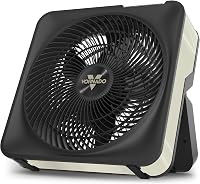
Choose the Vornado Model 80X for a dry indoor workspace where fine speed adjustment matters. Its 99 power levels let you adjust airflow more closely than the 3-speed options here.
The built-in kickstand changes the vertical airflow angle, and the removable grille helps with cleaning. A digital display and timer add convenience for buyers who want more control during indoor use.
It measures 6 inches deep by 20 inches wide by 20.15 inches tall and weighs 11.6 lb. Allow room for its supported operating position rather than squeezing it into a gap based on cabinet depth alone.
Choose it for an indoor hobby room or home workspace where you switch between gentle airflow and stronger circulation. Skip it if you need the utility blowers' accessory outlets or a fan suited to wet conditions.
Vornado designs this model for U.S. voltage requirements and supports its use only in the U.S. For placement ideas, see what an air circulator fan is and how to use one.
How much airflow does your garage actually need?
Choose airflow around the area you occupy and the path air can take, rather than using garage size as a fixed buying formula. There is no single CFM target that guarantees comfort in every garage.
CFM means cubic feet per minute, a measure of air volume moved. It does not describe the exact air speed at your face, the width of the stream or how the fan will sound beside your bench.
How should you compare high velocity fan airflow?
Use airflow figures as a starting point, especially between similar designs. The 2 Lasko blowers are a closer comparison than either blower and the DEWALT drum fan.
The U15617 moves more air by its stated maximum than the U12104. The DEWALT's much higher figure points toward a different job, but it does not mean it will feel proportionally stronger at every distance.
For a fixed work position, ask whether the fan can aim around a bench leg or cabinet. For a shared work area, consider whether shelving, vehicles or stored materials divide the space into separate pockets.
Avoid assigning a coverage area to the Vornado from its width alone. If you want broad room circulation, compare air circulator fans and plan where the returning air can travel.
Our air circulator versus fan comparison can help if you're deciding between a direct breeze and circulation around the room.
Where should you place a garage fan?
Place the fan on a stable, dry surface with a clear intake and outlet. Its airflow should reach you without the unit or cord entering a walkway, vehicle path or tool operating area.
For personal comfort, start with the fan aimed toward your torso from a safe distance. Turn it on at a low setting, then change the angle before increasing speed.
If the draft disrupts your work, aim it slightly past your body. A stronger setting is rarely helpful if it blows away plans, moves small parts or pushes dust onto a fresh finish.
For surface drying, first remove standing water and keep the equipment on dry ground. Aim across the damp area so air travels over the surface, following the fan's instructions and the finish manufacturer's drying guidance.
For fresh-air movement, plan both an entry and an exit path. Bringing in outdoor air helps only when outdoor conditions suit the job, and a blocked opening limits useful airflow.
Our guide on how to cool a garage with fans covers opening placement and airflow paths in more detail.
Keep loose rags, plastic bags and cords away from the grilles. Leave the clearance required in the manual, including behind a fan that appears to have plenty of room in front.
What power and operating conditions should you check?
Check outlet reach, electrical load and permitted use conditions before settling on a fan. These details can rule out an otherwise suitable model.
Both Lasko blowers have 10-foot cords and 2 grounded accessory outlets. They also have grounded plugs, circuit breakers and reset buttons, and Lasko identifies them as ETL listed.
The accessory outlets are useful near a work area, but their combined load limits still apply. Read the manual before connecting tools, and do not treat a reset button as permission to keep running an overloaded setup.
The DEWALT's 6-foot cord makes outlet placement more restrictive. Measure the actual cord route around benches and doorways, rather than the straight-line distance to the wall.
Use a suitable wall outlet whenever possible. If an extension cord is permitted, follow the fan's requirements for cord type and capacity, and keep connections away from damp areas.
Don't assume workshop styling means weather protection. The Lasko models and Vornado are for indoor use, while DEWALT's stated applications and indoor-use specification differ; confirm permitted conditions in its manual before any outdoor use.
None of these fans should be your control for flammable vapors or hazardous dust. Use ventilation and collection equipment suited to the material and task.
How do you choose controls and noise for long work sessions?
Choose controls that let you get enough airflow at a usable setting. Maximum output matters less if you spend hours near the fan and need to hear conversation or work instructions.
The Vornado offers the most speed adjustment here. The other models use simpler stepped controls, which suit buyers who prefer choosing a setting quickly and getting back to work.
No comparable sound measurements are available for these 4 fans, so don't rank them by quietness from airflow or motor type. Place any fan away from hollow panels or loose objects that could add vibration noise.
Think about your usual task. A stream that feels welcome during physical work may be distracting while sorting small parts or reading plans at the same bench.
For running costs, use the fan's electrical input rather than its CFM figure. Our guide to how much electricity a fan uses explains how speed and daily run time affect consumption.
How should you clean and store a workshop fan?
Unplug the fan before cleaning, then follow its manual for grille access and approved cleaning methods. Workshop dust can collect on guards and blades, so inspect the fan as part of your normal cleanup.
Use a soft brush or vacuum attachment where allowed, keeping pressure off blades and wiring. Don't spray cleaner or water into the motor, switches or accessory outlets.
The Vornado's removable grille is a useful maintenance feature. For the other models, check the manual before removing guards or trying to reach internal parts.
If airflow drops, inspect for blocked openings and buildup before assuming the motor needs repair. Stop using the fan if you notice a damaged cord, unusual smell or persistent rattling.
Store it dry, with the cord loosely arranged rather than tightly wrapped under strain. Keep tools and heavy boxes off the grille so the fan is ready for its next job.
What mistakes should you avoid when buying a shop fan?
Avoid buying by maximum airflow alone. A fan needs a safe place to sit, a usable power connection and an unobstructed route to the area you want to reach.
- Choosing by the size in the name: Measure the whole frame and its operating position, including any stand or tilt movement.
- Buying more fan than the task needs: Strong airflow can scatter debris or interfere with careful bench work.
- Ignoring carrying weight: A larger handle does not remove the effort of moving a heavier unit.
- Trying to fix blocked airflow with more speed: Move the obstruction or change placement first.
- Expecting a fan to replace air conditioning: Moving warm indoor air can improve personal comfort without lowering room temperature.
- Using a fan instead of dust collection: Capture debris at the source rather than spreading it through the workspace.
- Overlooking humidity during drying: Air movement helps evaporation, but moisture still needs a way to leave the space.
Before ordering, mark out the proposed fan spot with removable tape. Check that you can still open cabinets, move a chair and walk through the area with tools in hand.
Which high velocity fan should you choose?
Choose your high velocity fan by the task you repeat most often. Buy for your usual bench, room or drying job, then check the occasional uses it can also cover.
| Your main need | Choose | Main reason |
|---|---|---|
| Frequent moves and focused bench airflow | Lasko U12104 | Lighter weight and wide pivot range |
| More airflow from a portable utility blower | Lasko U15617 | Higher blower output with a carry handle |
| Air movement across a clear, open work area | DEWALT DXF2042 | Drum design and much higher air-volume figure |
| Adjustable circulation in a dry indoor workspace | Vornado Model 80X | Fine speed control and accessible grille |
Pick the smaller Lasko if carrying and storage decide the purchase. Step up to the larger Lasko when you want more blower output and can accept the extra weight.
Choose the DEWALT when floor space and outlet reach support its larger format. Choose the Vornado when indoor controls and cleaning access matter more than utility outlets.
For alternatives beyond these 4 models, use our garage and shop fan guide to match a high velocity fan to the area you need to reach.
Frequently asked questions
What size high velocity fan do I need for a garage?
Choose the fan around your work area, available floor space and airflow path. A compact blower suits a fixed bench or small drying task, while a drum fan suits a more open area; garage size alone cannot tell you which fan will reach your body or move air past shelves and equipment.
Is a high velocity fan good for a workshop?
A high velocity fan suits workshops where you need directed airflow for personal comfort or general circulation. Position it so it won't scatter loose dust, shavings or small parts; use separate dust collection and suitable exhaust equipment for tasks that create hazardous particles or fumes.
Can a fan dry a garage floor?
A fan can help a damp floor dry by moving air across the surface and carrying moisture away. Remove standing water first, then keep the fan, plug and electrical connections on dry ground; drying also depends on humidity, surface material and whether moist air can leave the space.
Should I choose a blower or a drum fan?
Choose a blower for directed airflow near a bench, floor or fixed work position; choose a drum fan for a more open work area where you have room for its frame. Compare the usable airflow path and outlet location before deciding that a larger fan is the better fit.
Can I use a garage fan to clear fumes?
Do not use a general-purpose garage fan as your protection against hazardous fumes; follow the material's safety instructions and use ventilation equipment suited to the hazard. A portable fan can spread contaminants, and ordinary electrical equipment should stay away from flammable vapors unless specifically approved for that use.